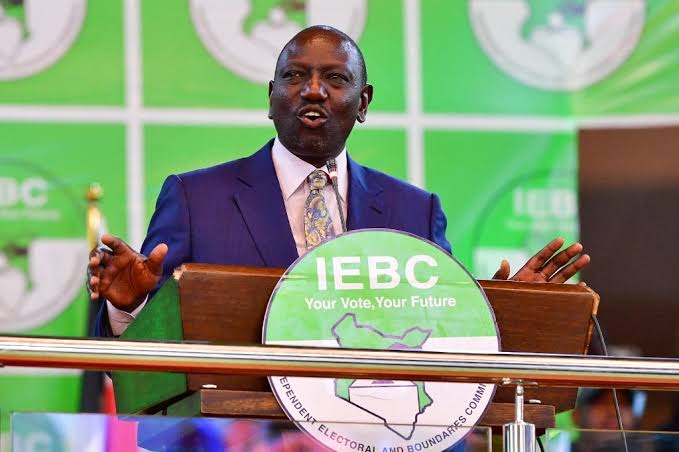
Speaking on Thursday, October 8, 2026, during the inaugural Agriculture and Food Security Summit at Jamhuri Park in Nairobi, Ruto said the government intended to use part of the money held in the National Infrastructure Fund (NIF) to reduce farmers’ dependence on unpredictable rainfall.

I Thought My Stolen Phone Was Gone Forever Until a Stranger Sent Me One Photograph That Exposed a Family Secret Overnight
The President said the investment would help Kenya transition from rain-dependent farming to irrigation-based agriculture, a move his administration believes could increase productivity, strengthen food security and improve farmers’ incomes.

I Thought My Wife Was Cheating With Our Pastor Until a Phone Exposed the Secret That Nearly Destroyed Our Marriage Again
Ruto Reveals Plan to Construct 1,250 Dams
According to the President, the government is planning to construct 50 large dams, 200 medium-sized dams and 1,000 smaller dams as part of its strategy to transform the agricultural sector.

I Thought My Children Had Stopped Speaking to Me Until a Hearing Test Revealed Why I Had Missed Their Words for Years
The projects are intended to provide reliable water for farming, particularly in areas where farmers have struggled with unreliable rainfall and recurring crop failures.
Ruto argued that depending on rain leaves farmers vulnerable to changing weather patterns, making irrigation infrastructure an important investment in the country’s long-term food security.
The proposed dams are expected to support a shift towards more predictable agricultural production, allowing farmers to grow crops with less dependence on seasonal rainfall.
How Much Money Does the Government Have in the Infrastructure Fund?
Ruto disclosed that the National Infrastructure Fund holds approximately KSh320 billion, which he said would help finance major development projects, including agricultural reforms.
The money comes from the government’s partial sale of its stake in Safaricom and the proceeds of the Kenya Pipeline Company share offering.
According to reporting by Citizen Digital, the President defended the decision, arguing that investments in irrigation and other infrastructure could generate greater returns than the income previously earned from the government’s shareholdings.
The National Infrastructure Fund is intended to support long-term development projects across several sectors. Its funding model seeks to mobilise resources for infrastructure without relying exclusively on additional taxation or public borrowing.
Why Ruto Wants Kenya to Move Away From Rain-Dependent Farming
The President said unpredictable weather over the past six years had affected agricultural production, leaving farmers struggling with crop failures and uncertainty over planting seasons.
He argued that expanding irrigation would help farmers plan their activities more reliably instead of depending entirely on rainfall.
Under the proposed approach, improved access to water would support increased food production and help stabilise agricultural output.
The government hopes the investment will also strengthen food security and create opportunities for farmers to expand their businesses.
However, the proposed dam construction programme will need to be implemented effectively for farmers to experience the intended benefits.
Ruto Highlights Other Agricultural Reforms
During the summit, the President also outlined other measures his administration says it has introduced to improve the agricultural sector.
These include:
- Subsidised fertiliser: Supporting farmers’ access to agricultural inputs.
- Farmer registration: Identifying farmers to improve the delivery of agricultural services.
- Access to markets: Expanding opportunities for farmers to sell their produce.
- Sugar sector reforms: Improving payment arrangements for sugarcane farmers.
- Outstanding payments: A commitment to clear debts owed to sugarcane and coffee farmers by the end of 2026.
Ruto claimed that sugarcane farmers who previously waited four or five months for payment were now receiving their money within seven days.
He also said sugarcane farmers were expected to receive bonus payments in November 2026. These are commitments and claims made by the President, rather than independent confirmation that all the promised payments have been completed.
President Defends Sale of Government Shares
The sale of government shares in Safaricom and Kenya Pipeline Company has formed part of the administration’s broader strategy to raise funds for national development.
The government’s position is that proceeds from the transactions can be reinvested in projects that support economic growth and generate long-term returns.
Ruto defended the strategy during the summit, maintaining that investments in irrigation and other infrastructure could deliver greater economic benefits than retaining the government’s previous shareholdings.
The National Infrastructure Fund is also intended to support investments in areas such as transport, energy, water and agriculture.