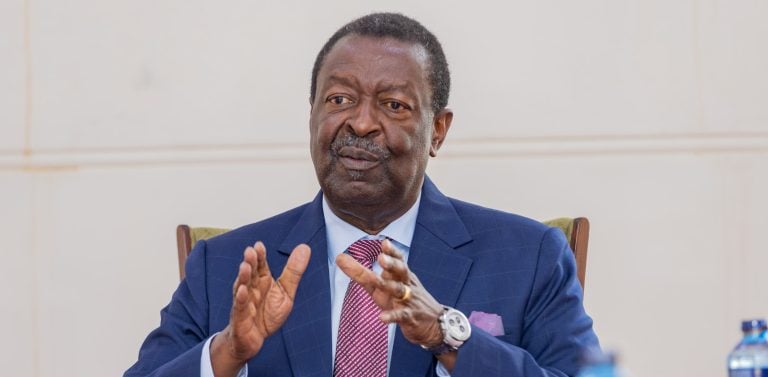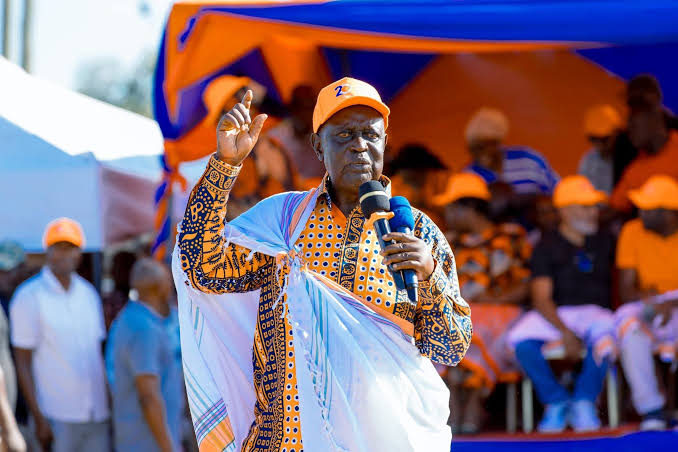
The future of the Orange Democratic Movement (ODM) is facing renewed scrutiny following a warning by Dennis Onyango, the longtime aide to the late former Prime Minister Raila Odinga, that the party could struggle to survive beyond the 2027 General Election if it mishandles its internal nominations.

I Thought My Stolen Phone Was Gone Forever Until a Stranger Sent Me One Photograph That Exposed a Family Secret Overnight
Speaking during an interview with K24 TV on Wednesday, October 14, 2026, Onyango said ODM’s ability to award nomination certificates fairly and secure a substantial number of seats in the next election would be critical to its political future.
I Thought My Wife Was Cheating With Our Pastor Until a Phone Exposed the Secret That Nearly Destroyed Our Marriage Again
“If they mismanage the nomination, I don’t think ODM will go beyond 2027,” Onyango said.

I Thought My Children Had Stopped Speaking to Me Until a Hearing Test Revealed Why I Had Missed Their Words for Years
His remarks raise a broader question about whether ODM can evolve from a party closely associated with one influential leader into a durable political institution capable of surviving successive generations of leadership.
Raila’s dream of building a party that would outlive him
According to Onyango, Raila wanted ODM to become an enduring political institution comparable to established parties such as the African National Congress (ANC) of South Africa, Tanzania’s Chama Cha Mapinduzi (CCM) and the Labour Party of the United Kingdom.
“I think he wanted to build a party in the league of ANC, CCM, and the Labour Party of the UK. He wanted a party that would always be there, would outlive him and outlive those who inherit it from him and on and on,” Onyango said.
The ambition, as described by Onyango, was to establish a party whose identity, structures and political influence would extend beyond the lifetime of its founding leadership.
However, the party now faces the challenge of demonstrating that its organisational strength can endure without relying on the personal influence that Raila exercised over its members.
Why the 2027 nominations could determine ODM’s future
Onyango identified party nominations as one of the most important tests facing ODM ahead of the 2027 General Election.
Internal nominations determine who receives the party’s endorsement to contest elective positions. When candidates and their supporters believe the process is unfair, disputes can emerge, potentially leading to defections, independent candidacies and divisions within local party structures.
Onyango argued that Raila often played a central role in containing such disagreements by persuading dissatisfied aspirants to remain in the party and support those who secured its tickets.
Without that same unifying influence, ODM will have to demonstrate that its internal institutions can resolve disputes and command the confidence of competing candidates.
Credible nominations, therefore, could help preserve party unity, while contested outcomes could place additional pressure on its leadership.
Can ODM secure enough seats to remain relevant in 2032?
Onyango linked the party’s long-term survival to its performance in the 2027 elections, arguing that securing a substantial number of seats would give it a stronger foundation for the following electoral cycle.
“I think if ODM manages to get substantial seats in the 2027 election, it will have a life going into 2032. But a lot will depend, in my view, on the nominations in ODM,” he said.
The distinction is important: winning seats would provide elected representatives, political visibility and a continuing role in national and county-level politics. But electoral representation alone would not automatically guarantee the party’s survival.
ODM would also need to retain its membership, develop credible leaders, manage internal disagreements and maintain a clear political identity that supporters can recognise across election cycles.
What would make ODM survive beyond 2032?
For ODM to realise the institutional ambition Onyango attributed to Raila, several factors would matter.
1. Transparent party nominations
A process that consistently awards tickets to legitimate winners could strengthen trust among aspirants, members and supporters. Clear rules and credible dispute-resolution mechanisms would reduce reliance on personal intervention by senior leaders.
2. Leadership succession and renewal
The party would need structures that allow new leaders to emerge, compete fairly and assume responsibility without destabilising the organisation. A sustainable institution must be able to manage leadership transitions through established procedures.
3. Strong electoral performance
Securing parliamentary, senatorial, gubernatorial and other elective seats in 2027 could preserve ODM’s political presence into 2032. Maintaining that presence in subsequent elections would require continued support and organisational work.
4. Unity despite internal disagreements
Differences over alliances, nominations and political strategy are not unusual in major parties. The challenge is whether ODM can resolve them without losing significant numbers of members or allowing disagreements to weaken its structures.
5. A clear political identity
Beyond its leadership, ODM would need to maintain a recognisable programme, explain its policy positions and demonstrate what it offers Kenyans. A consistent identity could help the party sustain support even as its leadership changes.